
Speed limits are supposed to be engineering decisions. A traffic engineer studies a road -- its geometry, sight lines, lane width, shoulder condition, surrounding land use -- and sets a limit that reflects the speed at which most reasonable drivers would travel safely. That is the theory. The practice, as it turns out, is something else entirely.
We built AI Event Videos to browse and analyze driving events captured by Bee Maps dashcams (Bee cameras) -- a network of consumer dashcams that record GPS-tagged video and telemetry as they drive. The system uses AI to detect and classify notable events: harsh braking, rapid acceleration, swerving, and high-speed travel. When we started digging into the data, one pattern emerged immediately and relentlessly: posted speed limits and actual driving speeds are in systematic disagreement, nearly everywhere, nearly all the time.
If every driver on a road is exceeding the posted limit, we have to ask a uncomfortable question. Is the limit correct, or are all the drivers wrong?
The Delaware Anomaly
Of the ten highest-speed events in our dataset, six come from a single state: Delaware. Not Texas, not Montana, not the German Autobahn. Delaware.
| Location | Max Speed (km/h) | Max Speed (mph) | Min Speed (km/h) |
|---|---|---|---|
| New Castle County, DE | 177.1 | 110.0 | 131.7 |
| Middletown, DE | 169.8 | 105.5 | -- |
| New Castle County, DE | 169.6 | 105.4 | -- |
| Kent County, DE | 167.0 | 103.8 | -- |
| New Castle County, DE | 166.0 | 103.1 | -- |
| Smyrna, DE | 164.7 | 102.3 | -- |
| Mohave County, AZ | 160.4 | 99.7 | -- |
| Grobbendonk, Belgium | 159.0 | 98.8 | -- |
| Olsztyn, Poland | 157.3 | 97.7 | -- |
| Grand Prairie, TX | 143.7 | 89.3 | -- |
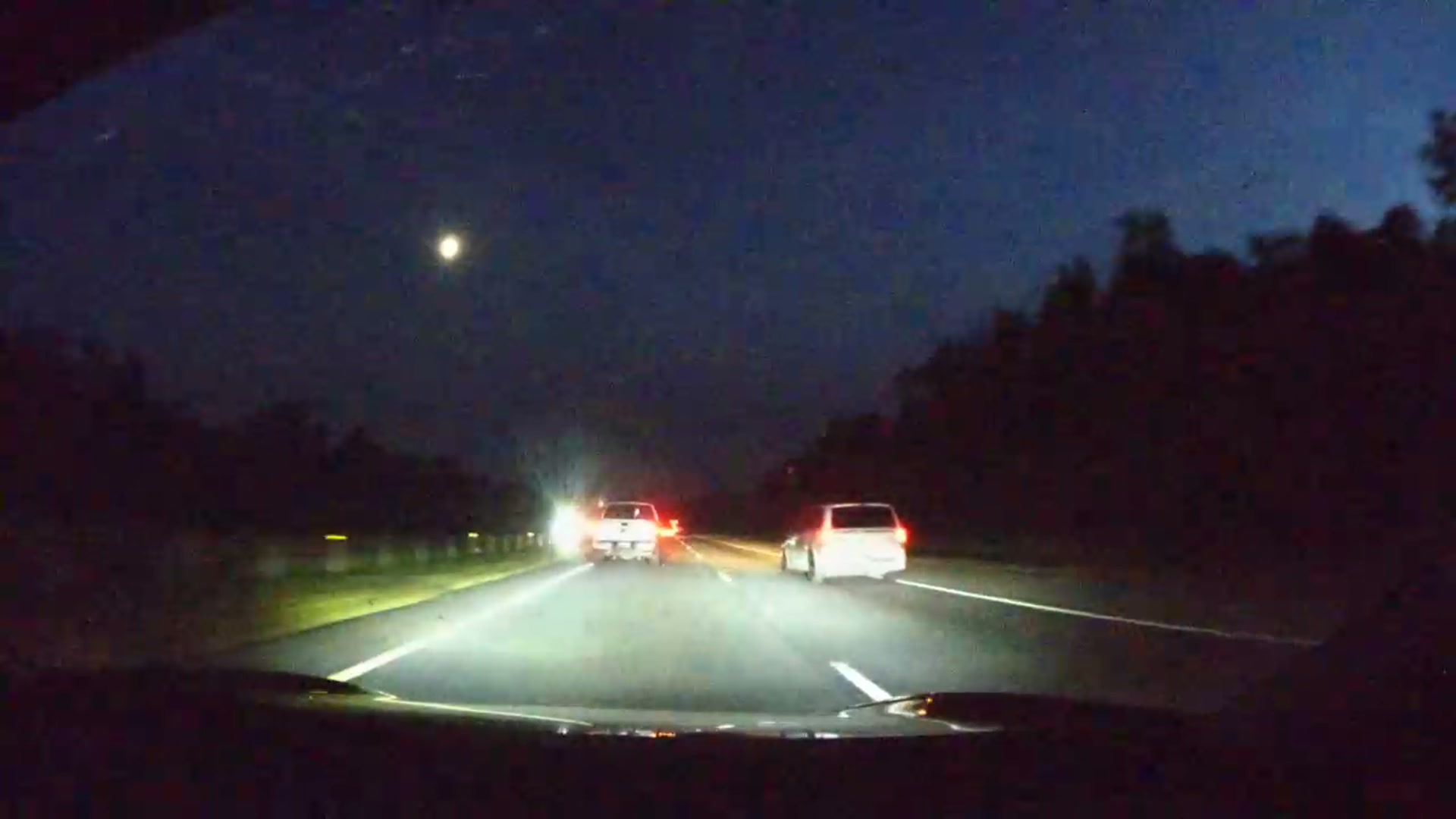
Look at the geography. New Castle County, Middletown, Kent County, Smyrna -- these are all along the Route 1 and Route 13 corridor in Delaware, a stretch of divided highway running through the central part of the state. The coordinates cluster tightly. This is not six unrelated incidents. This is the same road, producing triple-digit speeds repeatedly, across multiple dashcam captures on different days.
The top event recorded a vehicle traveling at 177.1 km/h -- 110 mph -- with a minimum speed during the event window of 131.7 km/h (82 mph). That minimum speed alone exceeds the posted limit on any public road in Delaware, where the maximum legal speed is 65 mph.
What kind of road produces this consistently? The answer is: a road whose design communicates a higher safe speed than its signs do. Wide lanes, long sight lines, gentle curves, a divided median, limited access points. The road was built for 70 or 80 mph. It was posted at 55 or 65. Drivers read the road, not the sign, and drive accordingly. Some of them drive far beyond even what the road design suggests -- but the baseline excess is a product of the mismatch between engineering and regulation.
The 85th Percentile Rule and Its Betrayal
Traffic engineers have a standard methodology for setting speed limits. It is called the 85th percentile rule, and it has been the foundation of speed zoning in the United States since the 1960s. The procedure is straightforward: measure the speeds of free-flowing traffic on a road, find the speed at or below which 85% of vehicles travel, and set the limit at or near that value.
The logic is sound. The 85th percentile speed represents the natural consensus of drivers about what is safe and comfortable on a given road. Setting the limit there means the vast majority of traffic is in compliance, enforcement can focus on genuine outliers, and the speed differential between vehicles -- a major crash risk factor -- is minimized.
In practice, the 85th percentile rule is more often honored in the breach than the observance. Speed studies are expensive and infrequent. Many limits are set decades ago and never revisited. When they are revisited, political dynamics intervene. Residents lobby for lower limits on roads near their homes. Elected officials campaign on "traffic safety" by lowering numbers on signs. Liability attorneys argue that higher posted limits imply government endorsement of risk. The result is a ratchet that pushes limits downward, away from measured traffic behavior.
The National Motorists Association has documented cases where speed studies recommended raising limits, and the recommendations were overruled by local officials. The Federal Highway Administration's own research has found that lowering a speed limit below the 85th percentile does not reduce average speeds or crash rates -- drivers continue to travel at the speed they judge appropriate for the road, regardless of what the sign says. The sign becomes a fiction, and the fiction has consequences.
When Underposted Limits Cause Harm
Consider a specific event from our data: a harsh braking incident on Highway 101 near Camarillo, California. The posted speed limit on this stretch is 40 mph. Forty miles per hour -- on a six-lane divided highway.

The dashcam telemetry tells a different story. Actual traffic was moving at 70+ mph. The flow of vehicles was traveling at nearly twice the posted limit, not because every driver on the 101 that day was reckless, but because 40 mph on a six-lane divided highway feels absurdly slow. It is absurdly slow. The road was designed for much higher speeds, and drivers behave accordingly.
Now imagine one driver decides to actually obey the sign. They hold 40 mph in the right lane. They are not a safety-conscious citizen -- they are a 30 mph obstacle in a 70 mph traffic stream. Every vehicle approaching from behind must brake, change lanes, or both. The speed differential between the compliant driver and the prevailing flow is the single most dangerous variable in highway safety. It is not the fast drivers who create risk in this scenario. It is the gap between them and the one driver who took the sign literally.
The harsh braking event we recorded was triggered by a traffic slowdown that caught faster vehicles off guard. In a world where the posted limit matched actual conditions -- say, 65 mph -- the speed differential would be smaller, drivers would have more consistent expectations, and the surprise factor that triggers panic braking would be reduced. The underposted limit did not prevent high-speed travel. It just made the consequences of the inevitable slowdown more abrupt.
The International Gap
This problem is not uniquely American. Our data includes high-speed events from Belgium (159.0 km/h in Grobbendonk) and Poland (157.3 km/h in Olsztyn). European motorways generally post higher limits than American highways -- 120 to 130 km/h is standard -- and yet the recorded speeds still exceed them by 20-30 km/h.
The gap is universal. What varies is the magnitude. In the United States, where speed limits are often set 15-25 mph below the 85th percentile, the gap is enormous. In much of Europe, where limits more closely track road design speeds, the gap is smaller but still persistent. In Germany, where large portions of the Autobahn have no speed limit at all, the concept of a "gap" dissolves entirely -- and the safety record on those unrestricted sections is, contrary to popular assumption, comparable to speed-limited motorways in neighboring countries.
The consistent finding across all of these contexts is the same: drivers calibrate their speed to the road, not to the sign. Signs that align with road design produce compliance. Signs that contradict road design produce universal non-compliance and a false sense of authority.
What the Data Now Enables
Here is where dashcam networks change the equation. The 85th percentile rule was always the right idea. The problem was never the methodology -- it was the data. Conducting a speed study requires deploying equipment to a specific location, collecting data for a specific period, and then extrapolating from that sample to set a permanent limit. It is expensive, infrequent, and static. Many speed limits in the United States are based on studies that are 10, 20, or 30 years old. Roads change. Traffic patterns change. The limits do not.
With millions of dashcams recording GPS-stamped speed data on every road, continuously, the constraint disappears. We can compute the true 85th percentile speed for any road segment, not from a week-long sample with a rubber hose across the pavement, but from thousands of real trips over months and years. We can track how that speed changes with time of day, day of week, weather, construction, and seasonal variation. We can identify roads where the 85th percentile has drifted far from the posted limit -- the Delawares and Camarillos of the world -- and flag them for review.
This is not a hypothetical. The data exists today. Bee Maps' network of Bee cameras is already collecting precisely the telemetry needed to do this at scale. The high-speed events, the harsh braking events, the swerving events -- these are all symptoms of the same underlying disease: speed limits that do not match roads. The dashcam data does not just document the symptoms. It provides the foundation for a cure.
The End of the Manual Survey
The era of setting speed limits by occasional manual survey is ending, whether transportation agencies are ready for it or not. For sixty years, the 85th percentile rule has been the gold standard of speed zoning, hamstrung by the practical impossibility of measuring actual speeds on every road at all times. That impossibility is now resolved. Dashcam networks provide continuous, high-resolution, GPS-accurate speed data on a scale that no manual survey could approach.
The question is no longer whether we can set evidence-based speed limits. We can. The data is being collected right now, on millions of road-miles, by cameras mounted behind windshields around the world. The question is whether we will use it -- or whether we will continue to rely on decades-old studies, political convenience, and the comfortable fiction that a number on a sign has any meaningful relationship to what actually happens on the road.
The dashcams already know the answer. The 85th percentile is already computed, every day, on every road. It is just waiting for someone to read it.
Follow us on X or Try Bee Maps for Free.