
The Bee Maps network now has dashcams mounted in vehicles across dozens of countries, each one recording the same set of measurements: speed, acceleration, gyroscope rotation, GPS coordinates. The cameras do not know what country they are in. They do not adjust for local customs. They simply record physics.
When you browse AI-detected driving events from these cameras across national borders, something unexpected emerges. The data has accents. Every country, it turns out, has its own driving personality — and it shows up not in how people describe their driving, but in the raw numbers their vehicles produce.
This is not a survey. Nobody was asked to self-report. These are involuntary confessions made by accelerometers.
The European Style: Fast Entry, Hard Exit
Central Europe drives fast and stops decisively. Austria appears twice among the most extreme braking events on the entire network, and both times the pattern is the same: high-speed travel followed by aggressive deceleration.

In Mooskirchen, Austria, a vehicle traveling at 147.9 km/h braked down to 30.5 km/h — the highest initial speed of any harsh braking event in the dataset. Nearby in Sankt Stefan ob Stainz, another Austrian driver went from 111.8 km/h to 15.3 km/h. These are not panicked stops. The final speeds suggest controlled, intentional braking from autobahn-adjacent velocities. The drivers knew what they were doing. They were simply doing it at speeds that would be illegal in most of the world.

Poland tells a similar story with its own inflection. In Wroclaw, a harsh braking event captured a vehicle going from 91.6 km/h to a complete stop — 0.0 km/h. Meanwhile, in Olsztyn, a high-speed event clocked 157.3 km/h. Poland produces both extremes: the full emergency stop and the triple-digit cruise.

Belgium rounds out the picture. Grobbendonk registered one of the fastest events globally at 159.0 km/h. For a country smaller than Maryland, Belgium generates a remarkable amount of high-speed data.
The European pattern, viewed through sensor data, is consistent: high baseline speeds on well-maintained roads, paired with the kind of decisive braking that suggests drivers who are comfortable operating at velocity. These are not tentative drivers surprised by their own speed. The acceleration curves tell the story of people who drive fast on purpose and brake hard by design.
Island Nations: Low Speed, High Reactivity
The United Kingdom and Japan are both island nations with left-hand traffic, dense populations, and reputations for disciplined driving. The sensor data confirms part of that reputation and complicates the rest.

The UK swerving event in Cheshire East is one of the most striking data points in the entire dataset. At only 30.3 km/h — barely above a residential speed limit — the vehicle recorded a lateral acceleration of 2.231 m/s squared. That is the highest g-force of any swerving event on the network. At a speed where most drivers feel completely safe, something demanded a violent evasive maneuver. The physics are almost paradoxical: the slowest swerve produced the hardest lateral force.
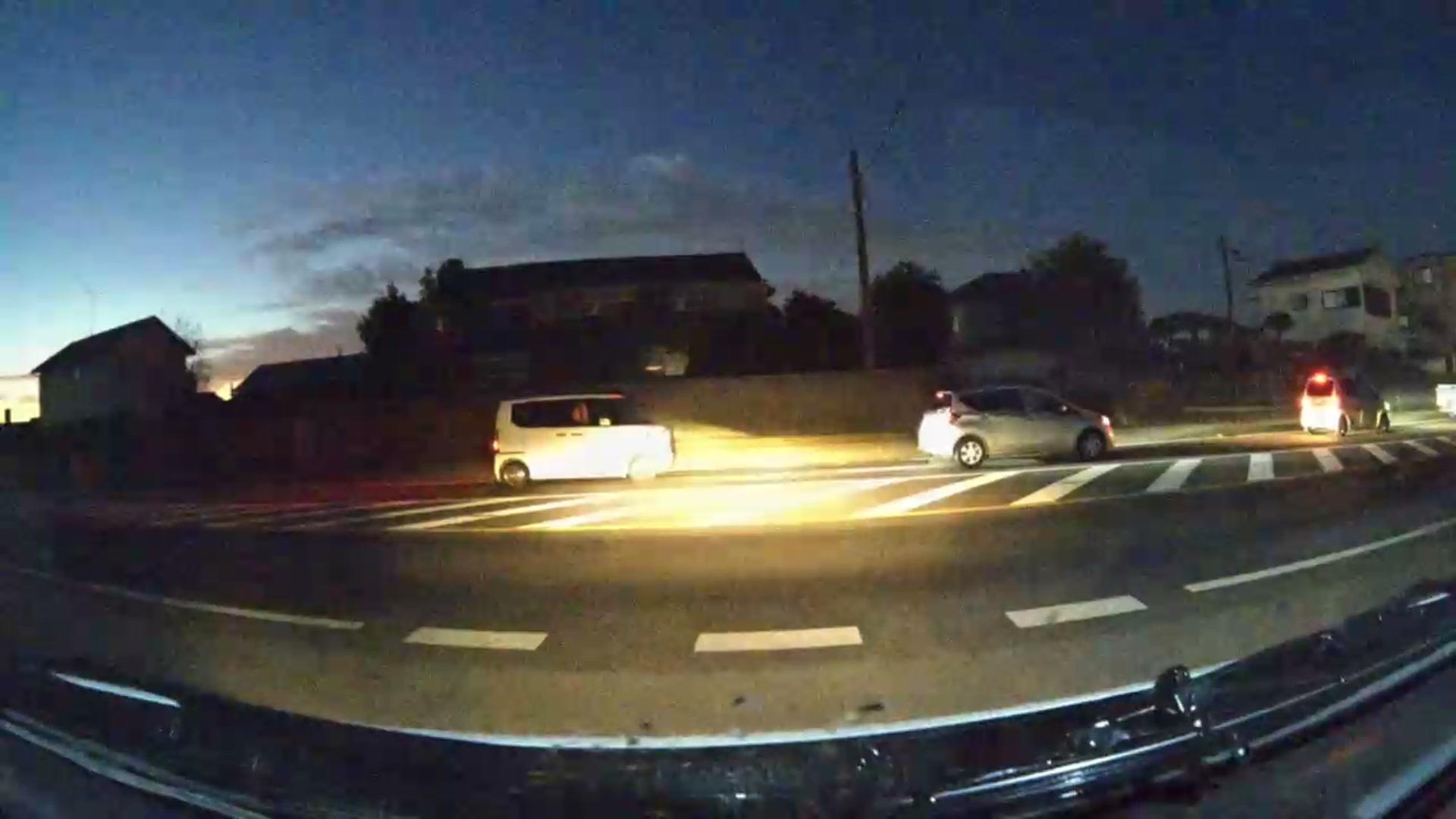
Japan's entry comes from Koga, where a swerving event saw speed drop from 75.3 km/h to 6.7 km/h. That is not just a lane change — that is a full emergency avoidance maneuver combined with heavy braking. The vehicle nearly stopped.
What these island nations share, the data suggests, is not calm driving but reactive driving. The average speeds are lower, but the response intensity is higher. When something goes wrong at 30 km/h in Cheshire or 75 km/h in Koga, the correction is immediate and extreme. Perhaps decades of driving on narrow, constrained roads have selected for a particular skill: the ability to generate maximum evasive force in minimum time.
Mexico and Latin America: The Assertive Start
Mexico dominates one category so thoroughly that it almost constitutes a national signature: aggressive acceleration.

Four of the top acceleration events on the network are Mexican cities. Salamanca leads at 78.8 km/h, followed by San Martin Texmelucan at 62.6 km/h, Queretaro at 46.6 km/h, and Cancun at 45.9 km/h. The geographic spread is telling — these are not clustered in one region. Salamanca is in the Bajio industrial corridor. Texmelucan sits between Mexico City and Puebla. Queretaro is a mid-size city in the central highlands. Cancun is a Caribbean tourist hub. The aggressive acceleration pattern spans climate zones, altitudes, and urban contexts.
Then there is the Coacalco swerving event at 32.2 km/h. Coacalco is part of the Mexico City metropolitan area, one of the most densely populated urban zones on Earth. A swerving event at 32 km/h in that context tells its own story: traffic so dense and unpredictable that evasive maneuvering becomes a routine skill rather than an emergency response.
The Mexican driving style, as the sensors describe it, is assertive. Quick starts from stops, confident acceleration into gaps, and lateral agility in congested traffic. This is not reckless driving. It is adaptive driving — a rational response to road conditions where hesitation creates its own dangers.
The American Pattern: A Continent of Contradictions
The United States does not have a driving style. It has several, and they barely resemble each other.

In Bailey County, Texas, a harsh braking event recorded a drop from 123.8 km/h to 1.1 km/h. Bailey County is in the Texas Panhandle — flat, rural, with long straight highways where a sudden obstacle (livestock, a stopped vehicle, a dust-obscured intersection) can demand everything a brake system has to offer. This is the physics of rural American driving: high sustained speed interrupted by rare but violent decelerations.
Delaware presents a genuine mystery. Multiple events in the state register speeds between 160 and 177 km/h. Delaware is a small, densely populated Eastern Seaboard state with no equivalent to the German autobahn. Where these speeds are happening, and why Delaware specifically, is the kind of question that makes this dataset genuinely useful for traffic safety researchers.
New Orleans, Louisiana, produced the highest g-force event in the US at 1.859 m/s squared. Anyone who has driven in New Orleans will find this unsurprising. The city's roads are famously deteriorated, its intersections are eccentrically designed, and its drivers have developed a correspondingly improvisational style.
Los Angeles contributes a steady stream of harsh braking events — the signature of stop-and-go freeway driving at scale. Tampa, Florida, registers swerving events consistent with its reputation as one of the more chaotic driving environments in the Southeast.
The American data resists generalization because America resists generalization. The country spans enough geography, climate, road infrastructure, and local culture that its driving data looks less like a single nation and more like a continent — which, of course, it is.
Australia and the Southern Hemisphere
Australia's events cluster around a specific profile: highway-speed incidents on long-distance roads.

New South Wales recorded a high g-force event at 102.3 km/h — fast enough to suggest an intercity highway, with forces strong enough to flag the AI detection system. In Fremantle, Western Australia, a swerving event went from 40.6 km/h all the way down to 0.3 km/h, essentially a swerve-to-stop maneuver.
The Australian pattern makes intuitive sense. The country's driving culture is built around long distances between population centers, with highway driving constituting a larger share of total driving time than in most European or Asian countries. When events happen, they happen at highway speed, and the response often involves coming to a near-complete stop — because on a remote Australian road, there may be nowhere else to go.
Portugal's Faro event — a high g-force incident dropping from 40.1 to 10.8 km/h at 1.729 m/s squared — and Serbia's Arandelovac swerve from 92.9 to 57.8 km/h add further data points to a growing picture of Southern European and Balkan driving that sits somewhere between the high-speed Central European style and the reactive island-nation pattern. Taiwan's Kaohsiung g-force event, with a speed drop from 57.6 to 40.2 km/h, suggests yet another regional variation in the broader Asian driving profile.
What the Sensors Are Actually Telling Us
This data represents something that has not existed before: an objective, quantitative, hardware-standardized comparison of driving behavior across cultures.
Previous attempts to compare international driving styles relied on self-reported surveys, insurance claim rates, or accident statistics — all of which carry enormous methodological biases. Survey respondents underreport their own aggressive driving. Insurance data reflects legal frameworks and reporting norms as much as actual behavior. Accident statistics depend on road infrastructure, vehicle safety standards, and emergency response quality.
Dashcam sensor data bypasses all of that. The accelerometer in a Bee camera in Mooskirchen measures force using the same physics as the accelerometer in a camera in Koga or Cancun. The measurements are not filtered through self-perception, legal systems, or cultural attitudes about what constitutes "normal" driving. They are filtered through nothing. They are just numbers.
This has immediate practical applications. Urban planners designing road infrastructure for different cultural contexts need to understand not just average speeds but braking profiles and lateral force patterns. Insurance actuaries pricing policies across borders need data that is not distorted by local reporting norms. Autonomous vehicle developers training systems for deployment in multiple countries need to model the actual behavior of human drivers in each market — not the idealized behavior described in driving manuals.
The sensor data answers a question that was previously unanswerable: not how people say they drive, but how they actually drive, measured identically everywhere.
The Road Ahead
As the Bee Maps network expands, every new camera adds resolution to this picture. More countries, more road types, more conditions. The dataset is not a snapshot — it is a continuous, growing record of how humanity operates vehicles, captured at the level of individual acceleration events and aggregated across borders.
Every culture that builds roads develops its own relationship with speed, risk, and the physics of moving a vehicle through space. Those relationships have been invisible until now — embedded in muscle memory, passed between generations of drivers, shaped by geography and infrastructure and law and habit. The sensors do not explain why Austrians brake from 148 km/h or why Mexico City drivers swerve at 32 km/h. But they prove, with decimal-point precision, that these patterns exist.
The world drives differently. Now we can measure exactly how.
Follow us on X or Try Bee Maps for Free.